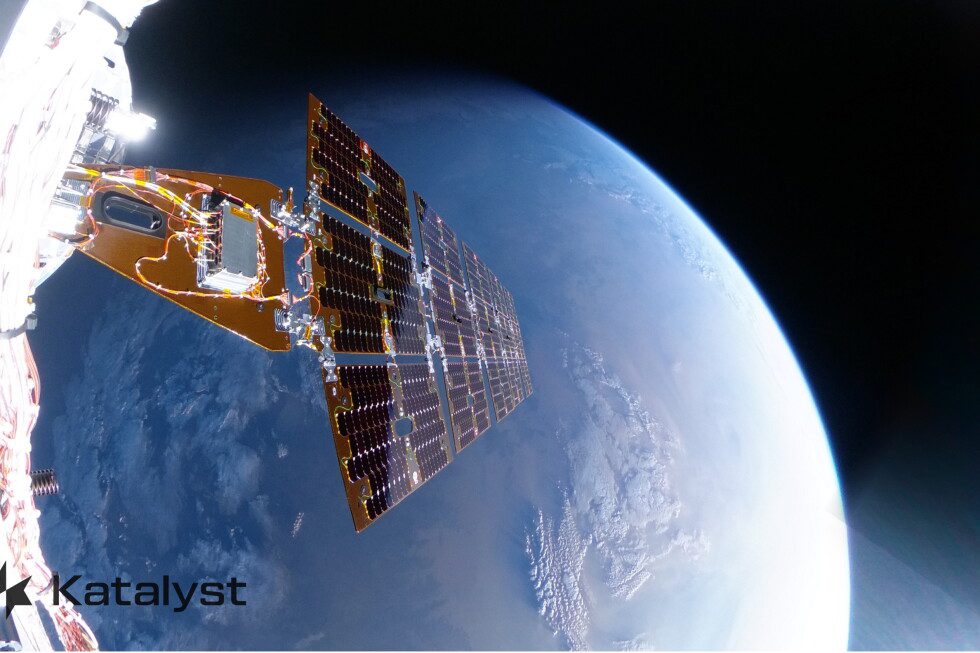
This photo provided by Katalyst Space shows a solar panel on Katalyst Space Technologies’ Link robotic servicing spacecraft in orbit on Aug. 24, 2026. (Katalyst Space via AP)
\n\nThis photo provided by Katalyst Space shows Katalyst Space Technologies’ Link firing all three of its xenon-fueled thrusters simultaneously on Aug. 30, 2026. (Katalyst Space via AP)
\n\nThis photo provided by NASA shows Kieran Wilson, LINK’s principal investigator, and Hunter Robertson, a space systems engineer, both at Katalyst Space, standing next to their spacecraft inside the SES (Space Environment Simulator) at NASA’s Goddard Space Flight Center in Greenbelt, Md., April 17, 2026, ahead of thermal vacuum testing. (Sophia Roberts/NASA via AP, File)
\n\nCAPE CANAVERAL, Fla. (AP) — A private spacecraft that was supposed to provide a lifeline to NASA’s Swift Observatory managed to get close to the sinking telescope and even snap photos two weeks after the rescue was abandoned.
\n\nBut the three-armed robotic salvager had to turn away because it was low on fuel, according to Katalyst Space Technologies, which attempted the daring operation.
\n\n“We got so close, but so far,” Katalyst CEO Ghonhee Lee told The Associated Press this week.
\n\nKatalyst’s Link spacecraft got within 15 kilometers (9 miles) of…
Original source: https://apnews.com/business