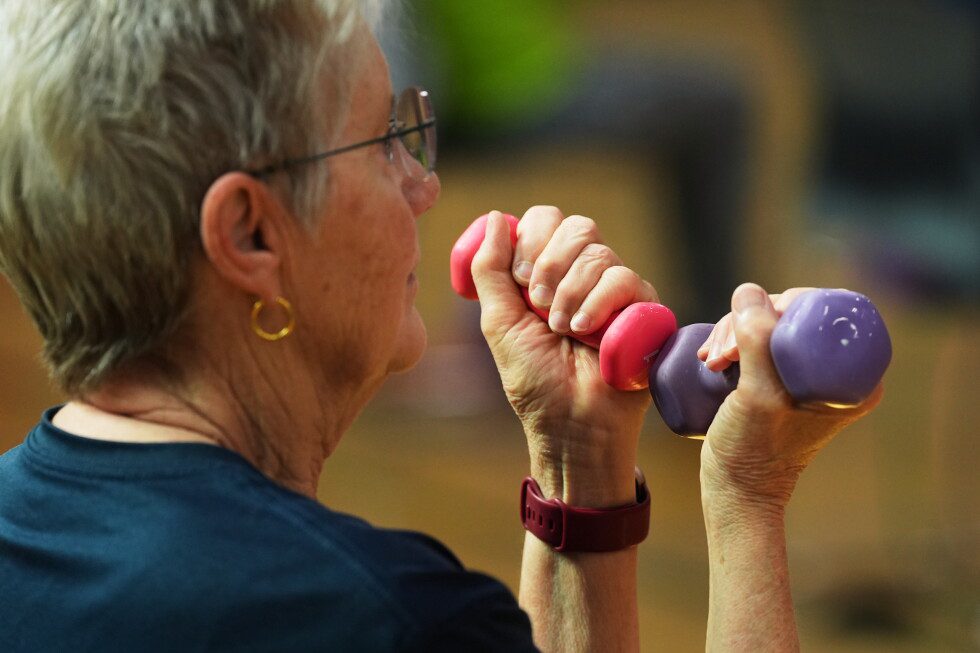
A participant uses light weights during a class for older adults at the Dale Turner Family YMCA in Shoreline, Wash., April 30, 2026. (AP Photo/Lindsey Wasson, File)
\n\nHand grip strength. Balance tests. Standing up from a seated position on the floor. These physical challenges are often touted as measurements of healthy aging and even predictors of longevity.
\n\nThey can provide valuable indications of your stamina and strength. They can estimate the risk of falls, which increase older adults ' risk of death. And they’re useful to doctors who work to address aging or people with injuries.
\n\n“A poor or declining result is a reason for a health professional to investigate why function is changing, rather than gauging how long someone will live,” said Auriel Willette, an expert on brain aging at Rutgers University.
\n\nHere’s a look at what mobility tests entail and how to apply the results to your health.
\n\nThis article is part of AP’s Be Well coverage, focusing on wellness, fitness, diet and mental health. Read more Be Well.
\n\n“Sit-to-stand” tests come in several forms. The U.S. Centers for Disease Control and Prevention’s 30-second chair-stand test is designed for patients older than 60, to see how many times…
Original source: https://apnews.com/business