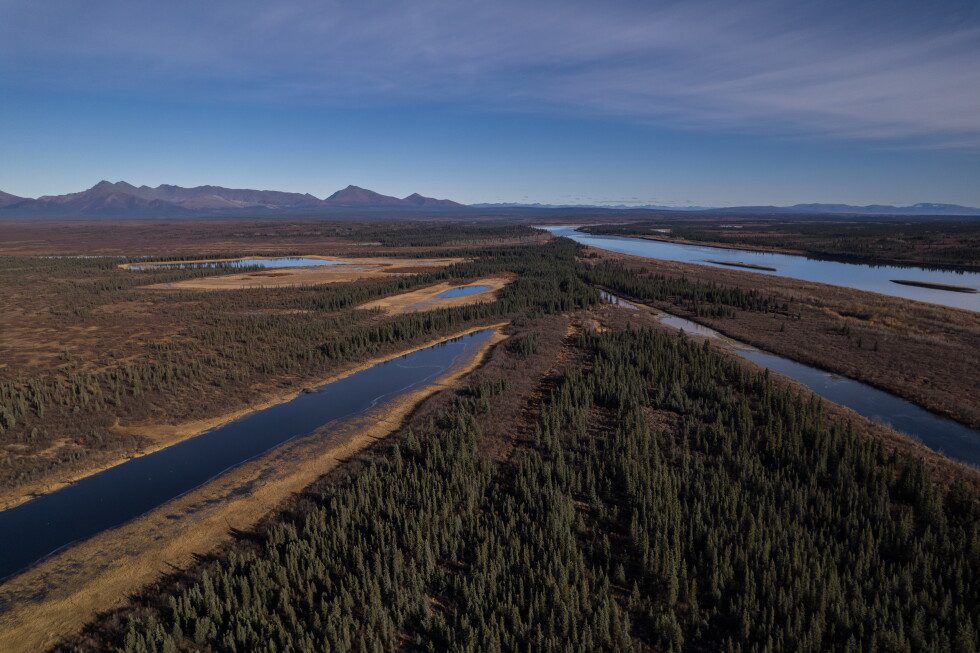
Onion Portage, a critical migration route for the Western Arctic Caribou Herd along the Kobuk River near Ambler, Alaska, is visible, Sept. 30, 2025. (AP Photo/Annika Hammerschlag, File)
\n\nTOOLIK LAKE, Alaska (AP) — With no tall trees reaching to the sky, Alaska’s North Slope tundra can look desolate — especially to outsiders from the Lower 48 who are used to in-your-face greenery.
\n\nBut up close, “the tundra’s kind of like the jungle,” said Adam Bloom, a Florida Atlantic University plant biology student. Except this lush Arctic jungle tops out at about 10 inches (25 centimeters).
\n\nTogether with Jake Francis, a professor at the university, Bloom walked through the spongy soil that was frozen solid a few weeks earlier. They towered over the knee-high dwarf birch trees. Showy rhododendrons didn’t reach the backs of their shoes as they walk in the North Slope, a vast and sparsely populated treeless area stretching from the Brooks mountain range to the Arctic Ocean.
\n\nFor centuries, Arctic cold has kept plant life small, a sort of dollhouse of Earth’s miniatures. The extreme environment has long given researchers a unique perspective on what makes plants grow, insight that would be hard to obtain elsewhere. Now it…
Original source: https://apnews.com/business